Hazardous Tree Removal
HAZARDOUS TREE REMOVAL IN SPARTANBURG, SC
Clemson Extension notes that a major limb joined to the trunk at less than a 45-degree angle tends to form a weak crotch that splits under wind and ice loads. That kind of hidden defect is where hazardous tree removal begins. D & A Tree Surgeons LLC removes dangerous trees in Spartanburg, SC, including leaning trunks, cracked and hollow stems, trees with fungal decay, and those crowding roofs, fences, and utility lines. Every job starts with a full risk assessment, followed by a removal method built around what sits underneath. Other tree companies often refer their riskiest removals to our licensed, insured crew.
A HAZARDOUS TREE GIVES WARNINGS BEFORE IT GIVES WAY.
Few trees fail without some sign first. A new lean after heavy rain, cracks opening along the trunk, mushrooms at the root flare, or large dead limbs in an otherwise green crown are the tree telling you something has changed. Noticing those signals early is what separates a planned removal from an emergency call at midnight.
The sooner a risky tree is assessed, the more options you keep, and the less likely it is to damage your home, a vehicle, or a neighbor's property first.
✓ Full risk assessment before work
✓ Leaning and cracked trees removed
✓ Decayed and hollow trunks handled safely
✓ Complex removals near structures and lines
HAZARDOUS TREE REMOVAL
DANGEROUS TREES NEED A PLAN, NOT A CHAINSAW AND A GUESS.
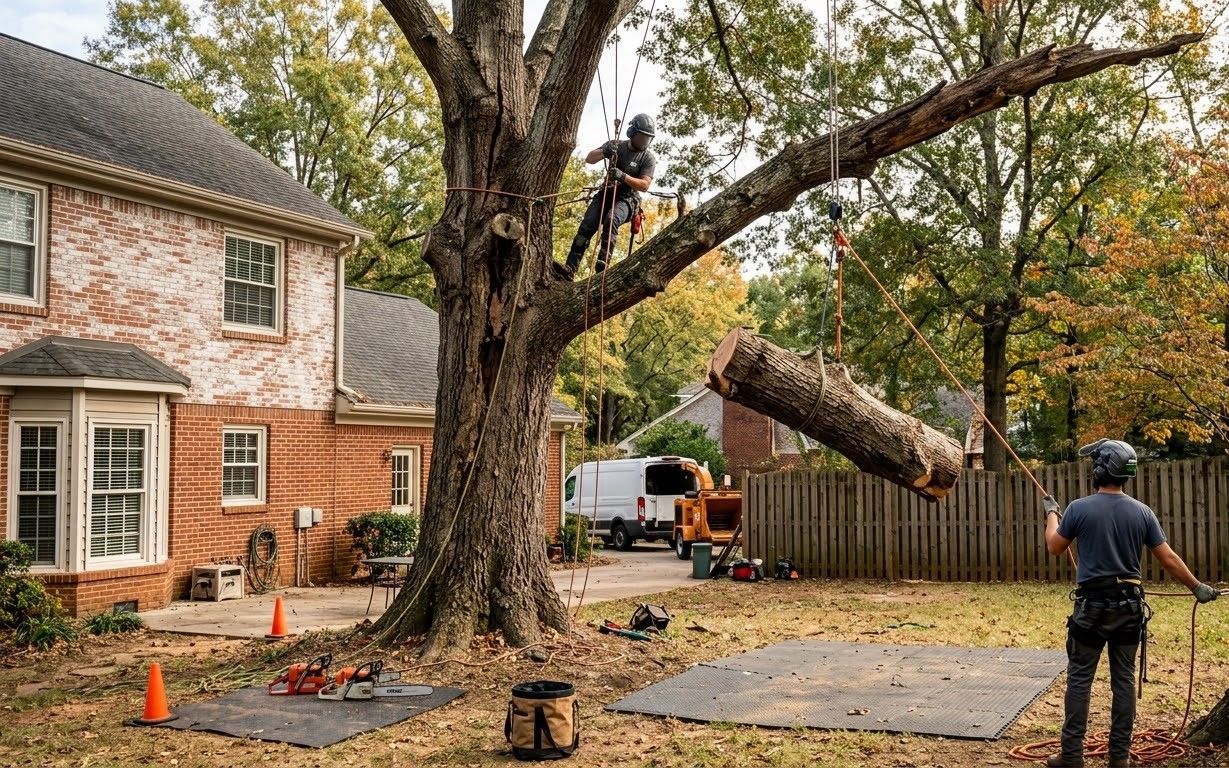
A hazardous tree behaves differently from a healthy one once cutting starts. Decay changes how wood hinges, cracks can open suddenly under the weight of a climber, and a leaning trunk stores energy that releases fast. We study each defect before choosing our approach, then use rigging, controlled lowering, and our spider lift to keep people off compromised wood and keep every section landing precisely where we intend.
UPSTATE STORMS FIND WEAK TREES FIRST.
Thunderstorms, tropical remnants, and occasional ice storms sweep through Spartanburg County most years, and they rarely spare a tree that was already struggling. Saturated clay soil loosens roots at the same moment wind loads the crown. Removing the trees with the clearest defects before storm season gives the healthy ones around them a better chance and keeps your property off the list of damage reports.
OTHER TREE COMPANIES CALL US FOR THIS WORK.
Hazardous removals are where our 60+ years of combined experience matter most. When a job looks too risky, other tree services in the area regularly pass it to us, knowing we have the training, rigging, and spider lift to handle trees in confined spaces or leaning over structures. We follow proven industry practices and explain the risk plainly before any cut. Have a tree you keep staring at during storms? Let us take a look.
WHAT REMOVING A HAZARD GIVES YOU.
Safety for Everyone Below
Children playing, guests parking, and neighbors walking by all spend time under your trees. Removing the one with serious defects takes that daily risk off the table.
Protection for Structures and Utilities
Falling trunks crush roofs, fences, and service lines, while failing roots can disturb foundations and buried pipes. Early removal keeps those repairs from ever becoming necessary.
Fewer Insurance Headaches
Insurers may push back when a visibly dead or decayed tree causes damage. Dealing with obvious hazards promptly helps you avoid awkward questions after a loss.
Control Over the Timing
A planned removal happens on a calm day with the right equipment in place. Waiting hands that decision to the next storm, which rarely picks a convenient moment.
A Clear Answer on Borderline Trees
Not every leaning or damaged tree must go. A proper assessment tells you which trees are truly hazardous and which can stay with pruning or support.
Relief During Every Forecast
Once the risky tree is gone, severe weather alerts stop triggering the same knot in your stomach. You can watch the storm roll in without watching the tree.
our services
OUR HAZARDOUS TREE REMOVAL WORK
Hazardous trees come in many forms, and each defect calls for a different removal approach. These are the high-risk situations we handle most often for homeowners, businesses, and property managers in the Spartanburg area.
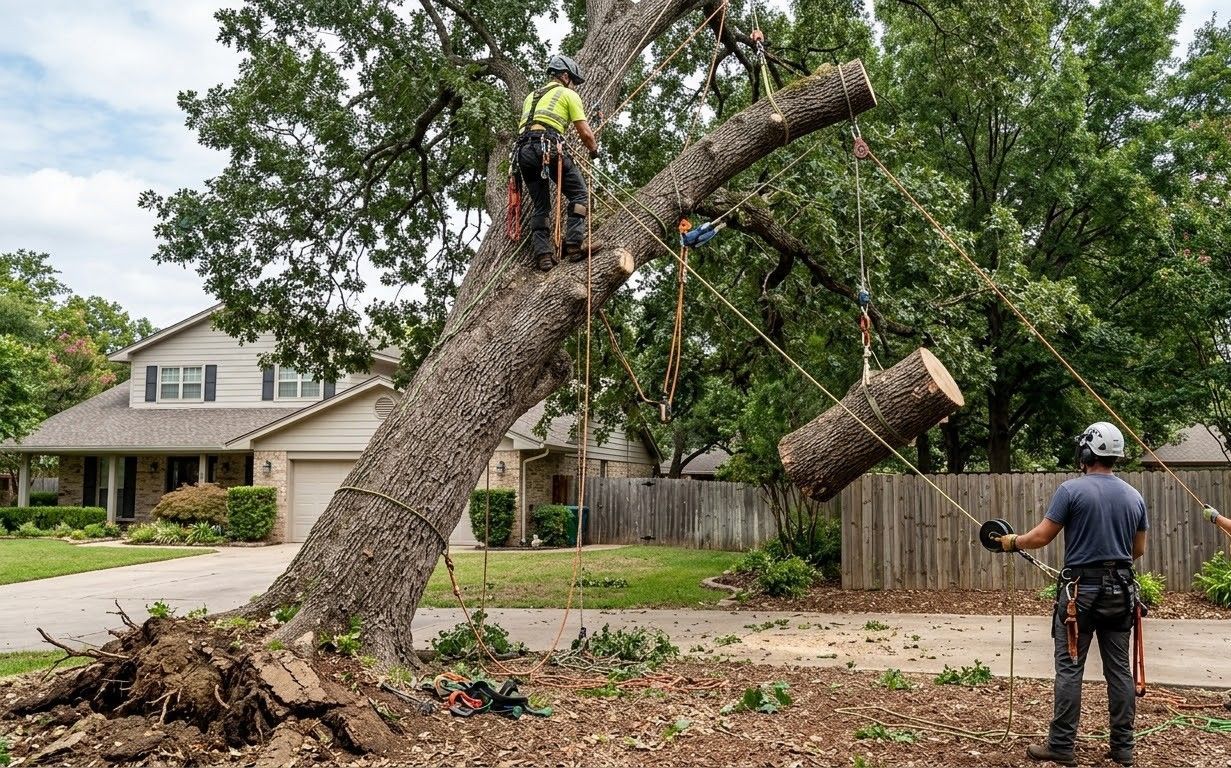
LEANING TRUNKS
Leaning Tree Removal
A sudden or worsening lean, especially with heaving soil at the base, signals root failure. We remove the crown first to shed weight, then dismantle the trunk in sections away from the direction of the lean.
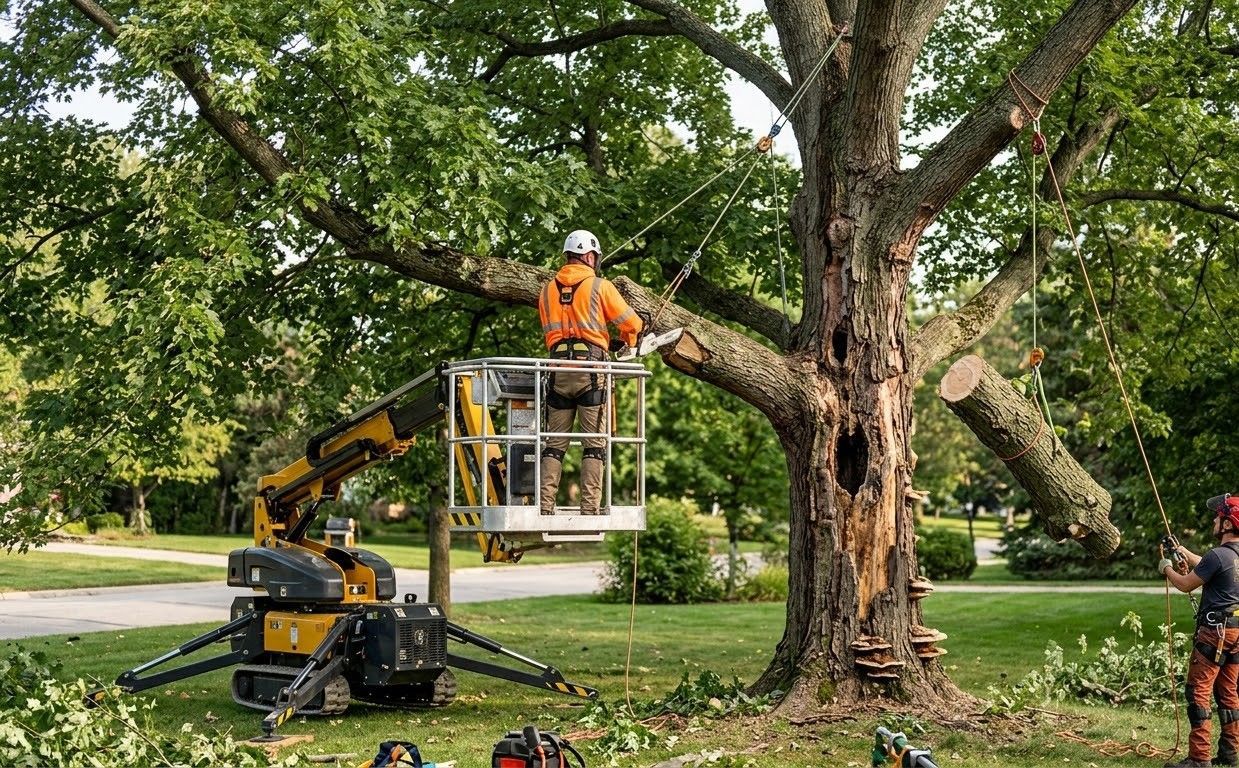
DECAYED WOOD
Decayed and Hollow Tree Removal
Rot, cavities, and fungal growth weaken wood from the inside while the canopy still looks healthy. We avoid climbing compromised sections, using our spider lift and rigging to work from sound anchor points instead.

CRACKED STEMS
Split and Cracked Tree Removal
Vertical cracks and split unions can open suddenly under load. We relieve weight from the weaker side first, then take the tree apart in an order that keeps the split from releasing unexpectedly.

DEAD WOOD
Large Deadwood Removal
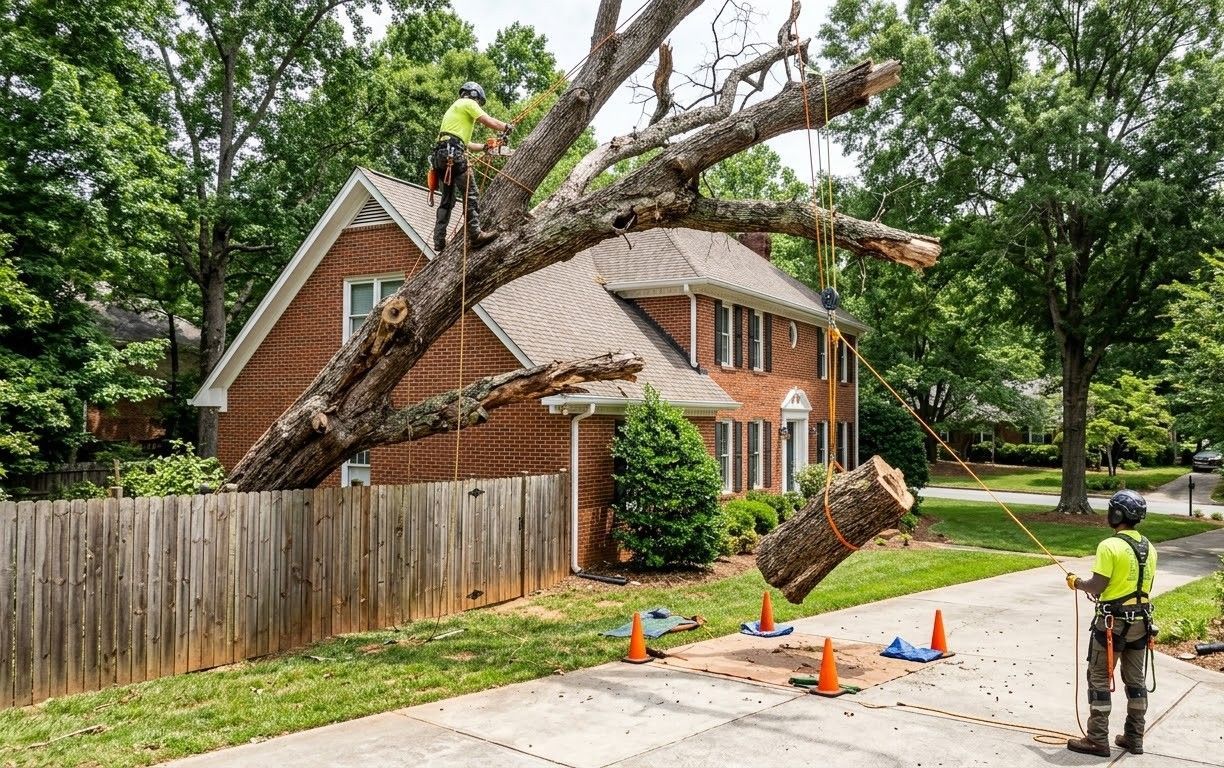
Big dead limbs in a living crown are among the most common causes of property damage. We remove them with controlled cuts and lowering lines, so heavy, brittle wood never free-falls onto anything below.

CONFINED SPACES
Trees Close to Structures
Trees squeezed between houses, pools, and fences leave no room for error. Our spider lift reaches over obstacles without heavy trucks on your lawn, and each piece is lowered into a cleared drop zone.

UTILITY AREAS
Trees Near Service Lines
Trees growing into the lines serving your home require extra planning and clearances. When energized lines are involved, the utility makes them safe first, and we then remove the tree in pieces kept clear of that equipment.
THE WORD ON OUR WORK
WHAT OUR CLIENTS SAY.
Customers with dangerous trees usually tell us the same thing afterward: they wish they had called sooner. They mention how carefully we explained the risk, how cleanly the removal went next to the house, and how the yard looked better than before. That feedback keeps our standards where they are.
FAQ
FREQUENTLY ASKED QUESTIONS.
Figuring out whether a tree is truly dangerous can feel like guesswork. These answers explain the warning signs, the risks of waiting, and how we approach high-risk removals around Spartanburg.
What makes a tree hazardous?
A tree becomes hazardous when a structural defect, such as decay, cracks, a heavy lean, dead limbs, or root damage, combines with a target it could hit. The same defect far from people or buildings carries much less risk.
Do hazardous trees need to be removed right away?
Delaying removal raises the chance of falling limbs, trunk failure, or root damage to foundations and utilities. Trees with active cracks or new leans deserve prompt attention, while slower decline can often be scheduled within a few weeks.
Is a leaning tree always dangerous?
Not necessarily. A tree that grew at a gradual lean toward light often has adapted roots and wood. A lean that appears suddenly, especially with cracked soil or raised roots on one side, points to active root failure.
Can a hollow tree still be structurally sound?
Sometimes. Trees can stand for years with limited internal decay if enough sound wood remains around the outside. The amount, location, and progression of the hollow determine the risk, which is why a hands-on assessment matters before deciding.
What is a spider lift, and why does it help?
A spider lift is a compact, tracked aerial platform that fits through gates and sets up on outriggers. D & A Tree Surgeons LLC uses one around Spartanburg, SC, to reach dangerous trees without climbing compromised wood or rutting lawns.
What if the dangerous tree belongs to my neighbor?
Start with a friendly conversation and share any photos of the defects. If the tree stays untreated, a written notice creates a record. We can assess the tree with the owner's permission and explain the risks to both households.
Can you remove a hazardous tree in a very tight space?
Yes. Tight spaces are exactly where careful sectional removal and good rigging shine. We lower each piece on ropes into a small cleared area, so trees wedged between houses, garages, or pools come down without striking anything nearby.
Why trust your team with a hazardous removal?
Other tree companies refer their hardest jobs to D & A Tree Surgeons LLC because of our training, rigging, and spider lift access. Spartanburg, SC, property owners also get honest assessments and a licensed, insured, owner-operated crew on site.
HOW WE WORK
FROM WARNING SIGN TO SAFE GROUND, HERE IS HOW.
STEP 01
WE INSPECT THE DEFECTS
We look closely at the trunk, root flare, unions, and crown, checking for decay, cracks, fungal growth, lean, and dead limbs. We also note every target within reach, from roofs and cars to lines.
STEP 02
WE RATE THE RISK
Combining the defects with what could be hit tells us how urgent the situation is. You get a straightforward answer on whether the tree must come down, can wait, or could be saved with pruning or cabling.
STEP 03
WE CHOOSE THE ACCESS
Compromised wood changes how we reach the tree. Depending on its condition, we climb sound sections, work from our spider lift, or combine both, always keeping crew weight off the weakest parts of the tree.
STEP 04
WE RIG EVERY HEAVY PIECE
Lowering lines and anchor points are set in advance so limbs and trunk sections descend under control. Nothing large is simply cut loose near a structure, which protects roofs, fences, and landscaping from impact.
STEP 05
WE DISMANTLE IN ORDER
We remove weight in the sequence that keeps the tree stable, often starting on the side opposite a lean or crack. Each cut is planned so the remaining wood never shifts toward people or property.
STEP 06
WE CLEAR AND CONFIRM
Once the tree is down, we chip and haul the debris, rake the area, and point out any nearby trees showing similar warning signs, so you understand the full picture before we pack up and leave.