Tree Cabling
TREE CABLING IN SPARTANBURG, SC
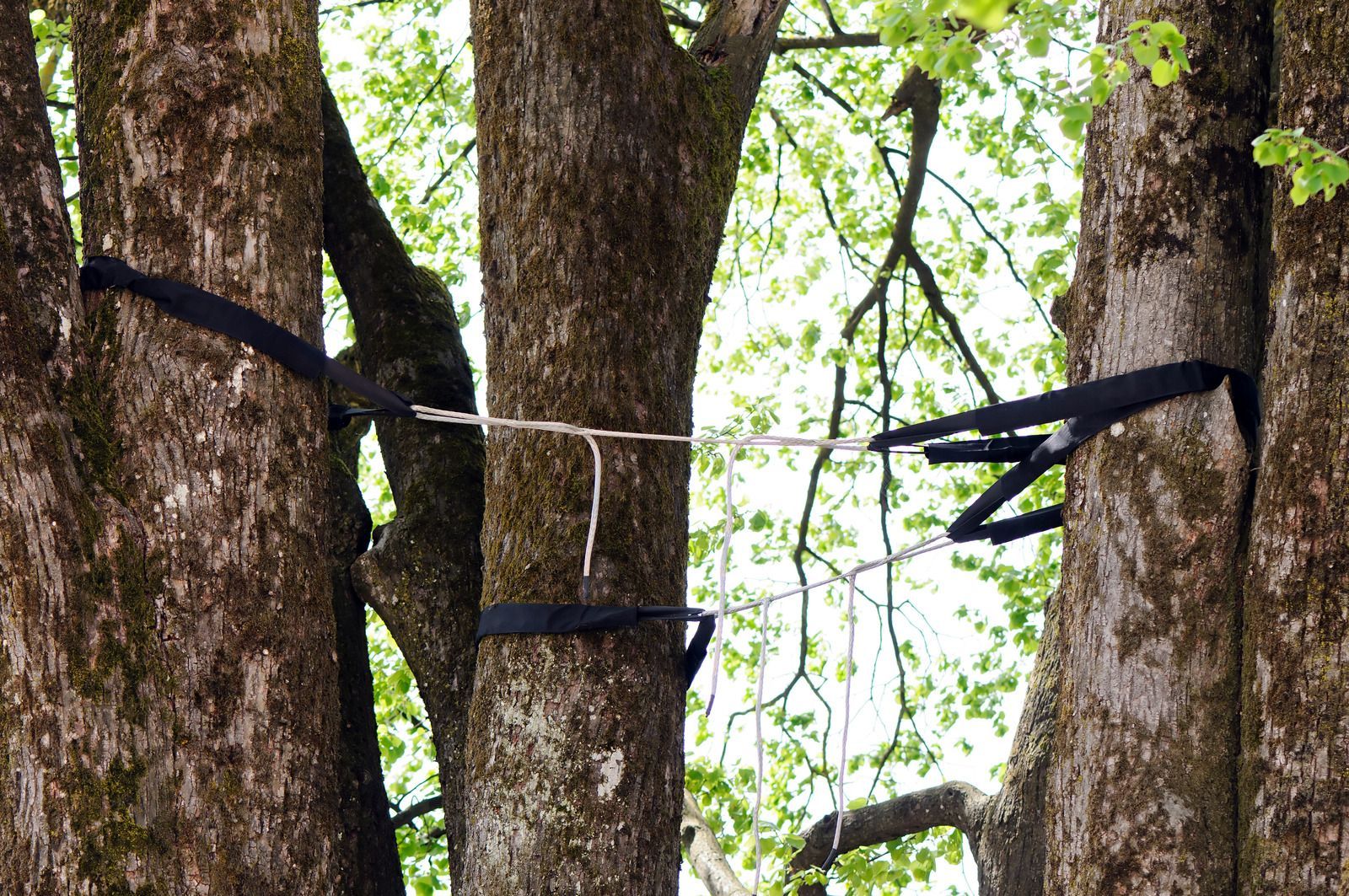
Industry guidance under the ANSI A300 standard places a support cable about two-thirds of the distance from a weak branch union to the branch tips, where it gains the most leverage against splitting. Placement like that is what makes tree cabling work. D & A Tree Surgeons LLC installs cabling and bracing systems in Spartanburg, SC, for co-dominant trunks, heavy or uneven limbs, cracked unions, and storm-stressed trees worth saving. Our trained technicians use high-strength cables to share the load across the crown, then inspect the system over the following years. Every consultation is free, and residential and commercial properties are both welcome.
A SPLIT UNION DOES NOT HAVE TO MEAN LOSING THE TREE.
Many mature trees develop a weak point over time: two trunks growing from one narrow fork, a heavy limb reaching too far, or a crack that opened during a storm. Left alone, those defects often end in a split that takes half the tree and whatever sits below it. Cabling gives the tree support right where it needs it most.
Properly installed cables reduce strain on the weak areas, guide healthier growth, and can add years of safe life to a tree that would otherwise have to come down.
✓ Co-dominant trunks supported
✓ Heavy limbs cabled and braced
✓ Storm-damaged trees stabilized
✓ Regular cable inspections
TREE CABLING
SAVE THE SHADE TREE THAT MAKES YOUR SPARTANBURG YARD FEEL LIKE HOME.
Some trees are worth the effort to keep: the oak that shades the porch, the maple the kids climbed, the tree that anchors the whole landscape. When one of them develops a structural weakness, cabling is often the difference between keeping it and losing it. We evaluate the defect honestly, install supports where they will do real work, and tell you plainly when a tree is beyond saving.
CABLING BUILT FOR UPSTATE WIND AND ICE.
Summer thunderstorms load a wide crown with wind, and occasional Upstate ice storms add weight that narrow unions were never built to carry. Species with tight, V-shaped forks, including the Bradford pears South Carolina stopped allowing for sale in 2024, are especially prone to splitting. Supplemental cables help trees share those loads across the crown instead of concentrating the stress at a single weak point.
SAVING A TREE TAKES MORE JUDGMENT THAN CUTTING ONE DOWN.
Anyone with a saw can remove a tree, but knowing when a tree can be saved takes training and time spent in canopies. We bring 60+ years of combined experience to every cabling assessment, weighing the defect, the tree's overall health, and what sits underneath. We would rather tell you honestly that cabling will not help than sell you a system that fails. Wondering whether your tree is a candidate? Ask us.
WHAT CABLING DOES FOR YOUR TREE.
A Longer Life for Valued Trees
Cabling reduces strain on weak unions, helping a mature tree stay healthy and standing for years longer than it would without support in the crown.
Lower Risk of Splitting
Supporting co-dominant trunks and heavy limbs makes a sudden, damaging split far less likely, protecting your home, vehicles, and anyone spending time beneath the canopy.
Protection Through Storm Season
Cables help the crown share wind and ice loads, so a single weak fork is not left carrying all of the stress during severe weather events.
Shade and Value Preserved
Mature trees cool homes, frame landscapes, and add real, lasting appeal. Keeping one standing preserves benefits that would take decades to replace with new plantings.
Better Growth Over Time
Support in the right place helps guide how the tree grows, reducing strain on weak areas and encouraging a stronger, more balanced structure as it matures.
An Alternative to Removal
When a tree is otherwise healthy, cabling offers a way to address a structural flaw without losing the tree, its shade, or the character it gives your property.
our services
OUR TREE CABLING WORK
Every cabling job starts with the specific weakness a tree has developed. These are the support systems and related services we provide most often for homeowners and commercial properties around Spartanburg and the Upstate.
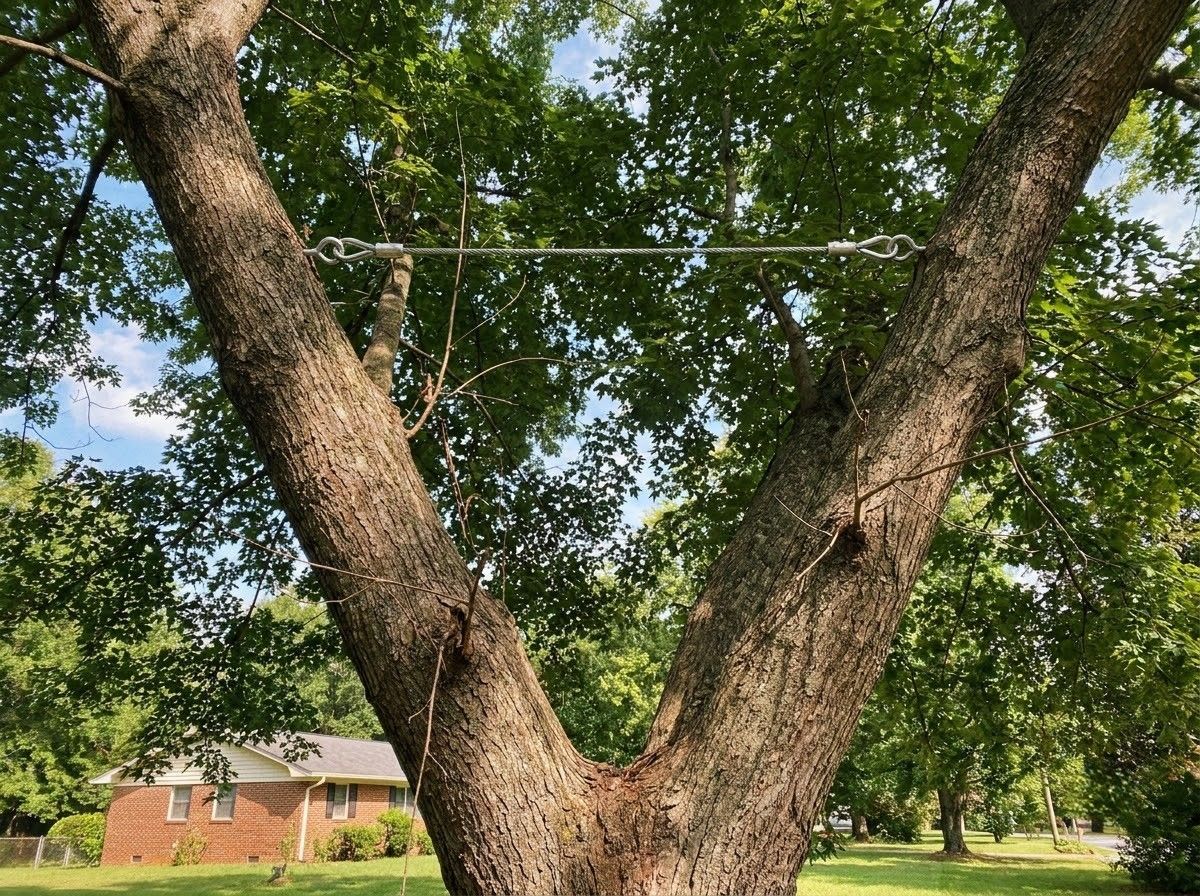
MULTIPLE TRUNKS
Co-Dominant Trunk Cabling
Two or more trunks competing from a single narrow fork are prone to splitting apart. We install high-strength cables high in the crown to tie the stems together so they share load instead of pulling away.
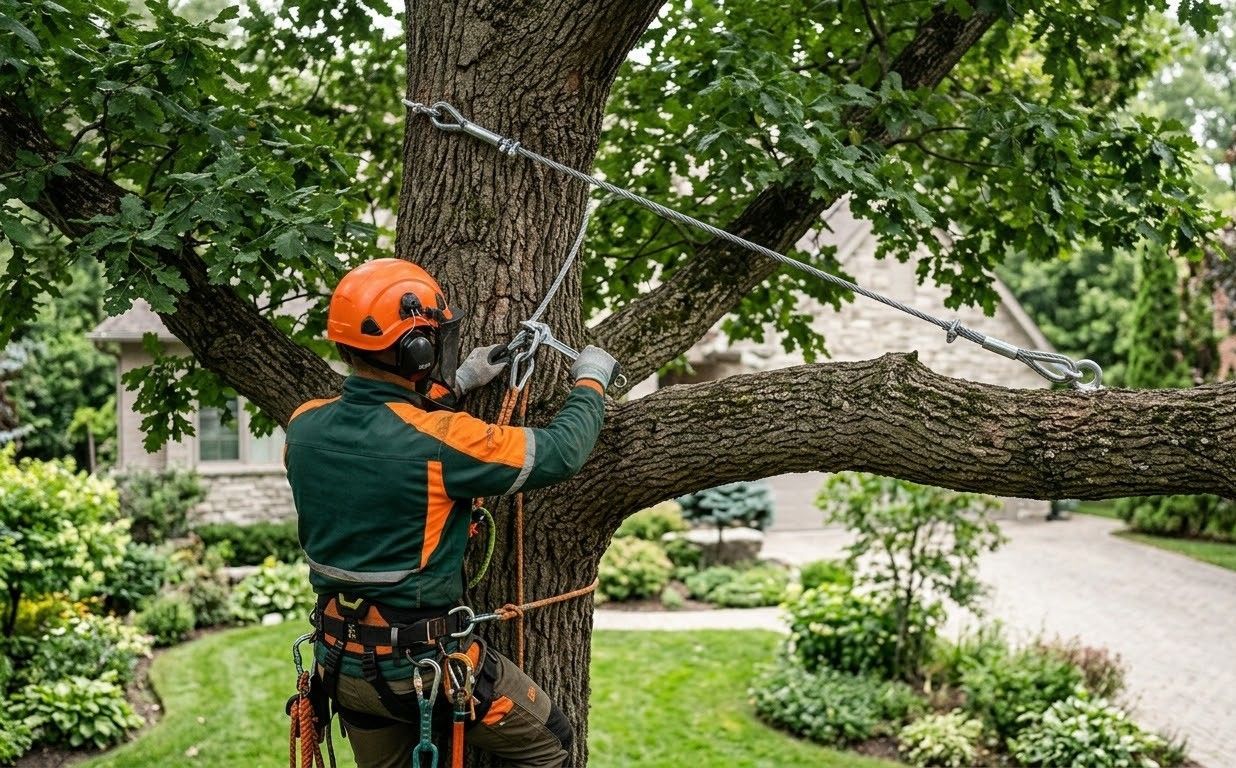
HEAVY LIMBS
Heavy Limb Support
Long, heavy, or uneven limbs put enormous leverage on their attachment points. A properly placed cable transfers part of that weight to a stronger section of the tree, reducing the risk of breakage.
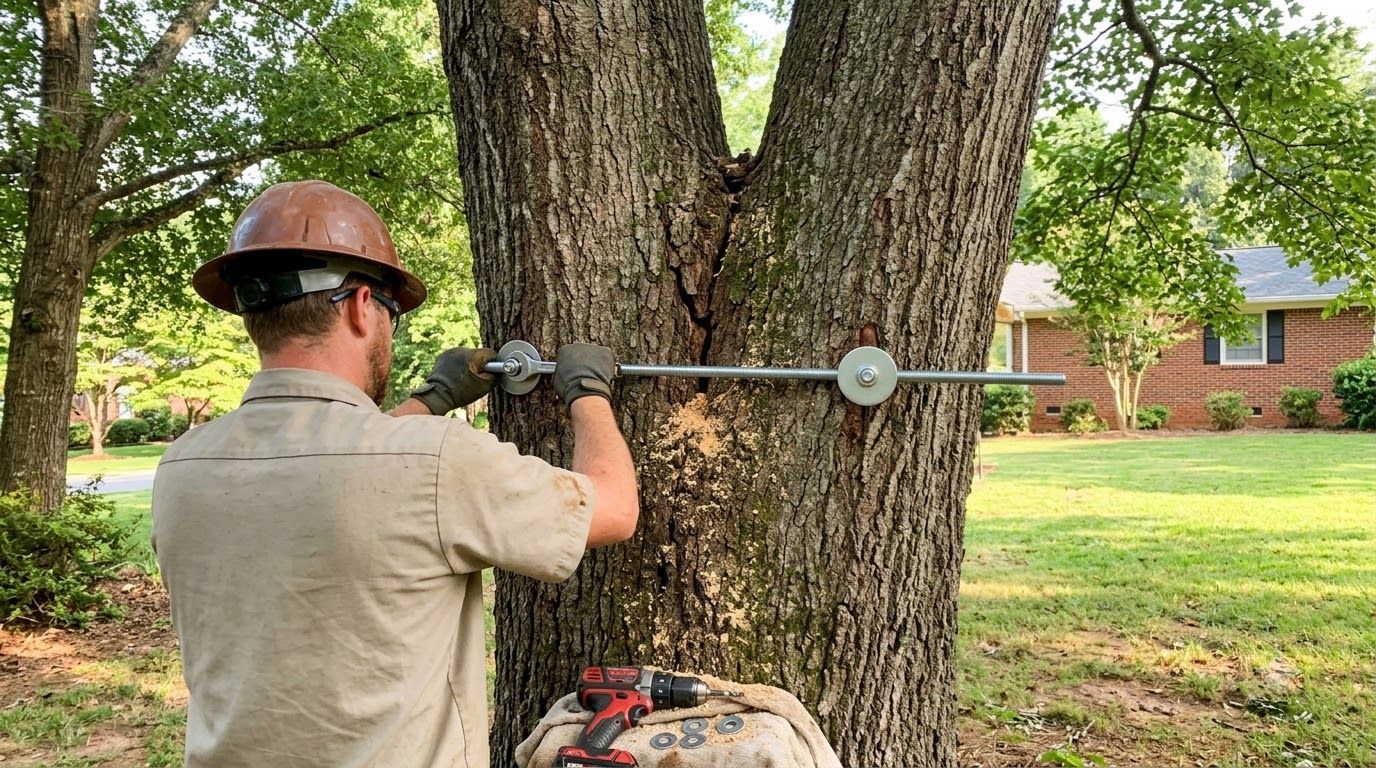
TRUNK BRACING
Tree Bracing
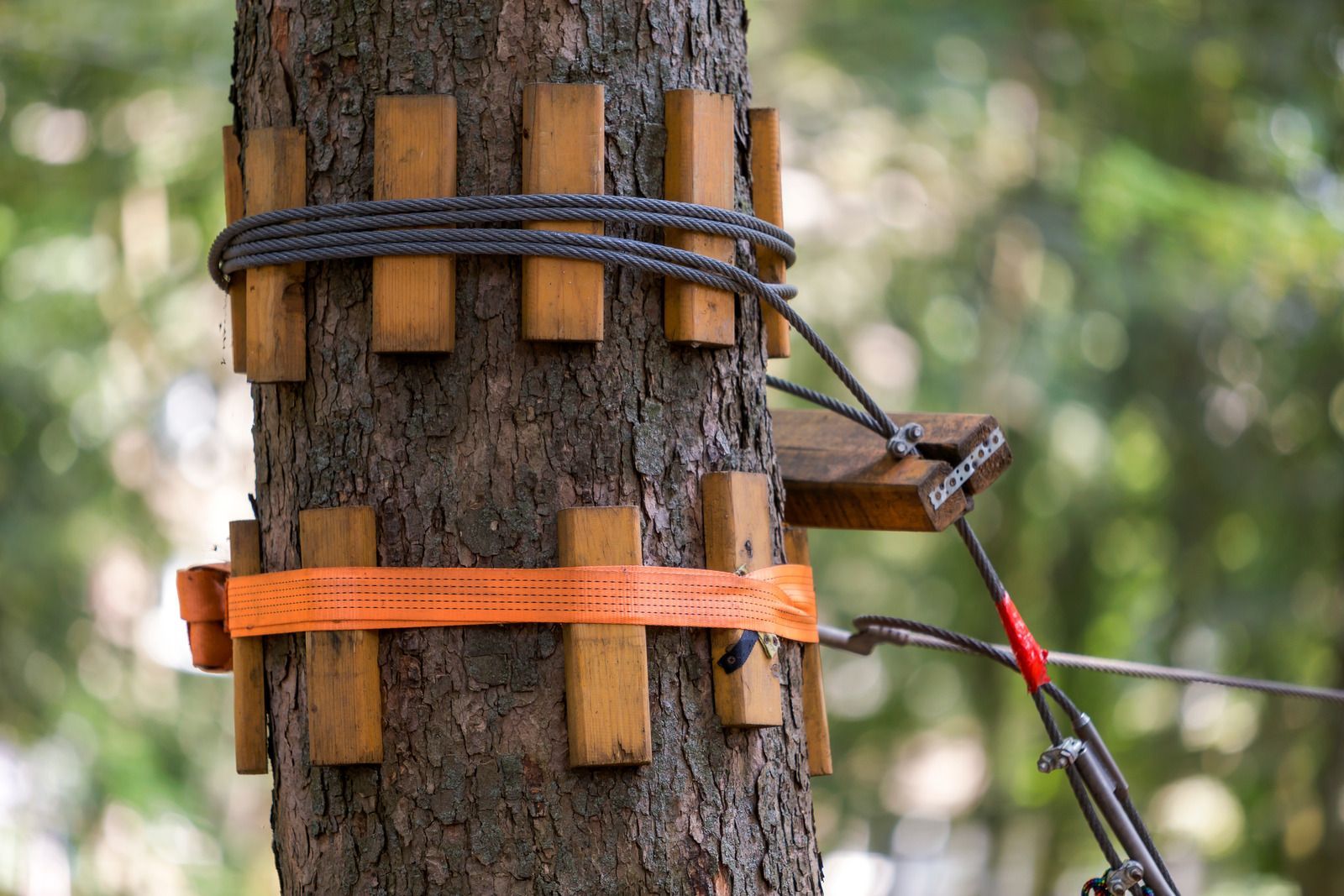
When a union is already cracked or especially weak, bracing adds rigid support lower in the tree. Combined with cabling above, bracing holds the defect together and helps limit further movement at the crack.
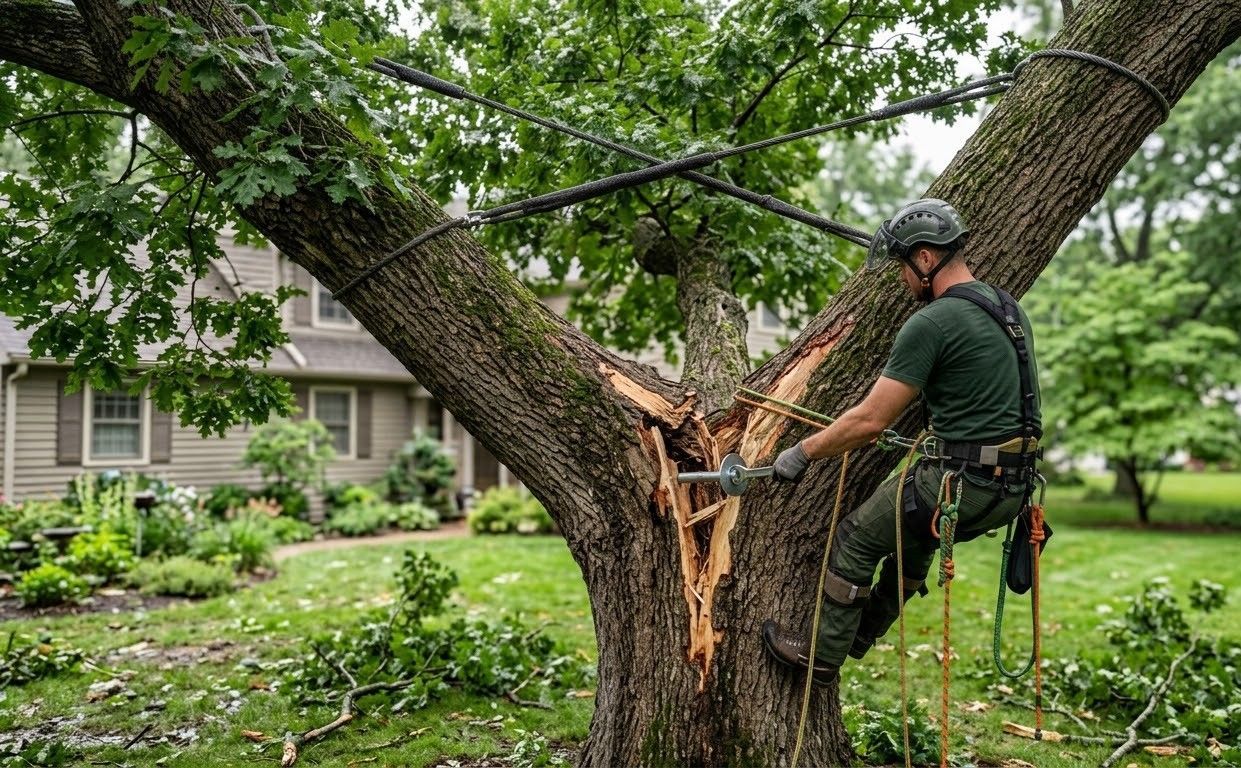
STORM RECOVERY
Storm-Damaged Tree Stabilization
A tree that survived a storm with a cracked union may still be worth saving. After assessing the damage, we stabilize it with supports that help protect the tree and your property through recovery.
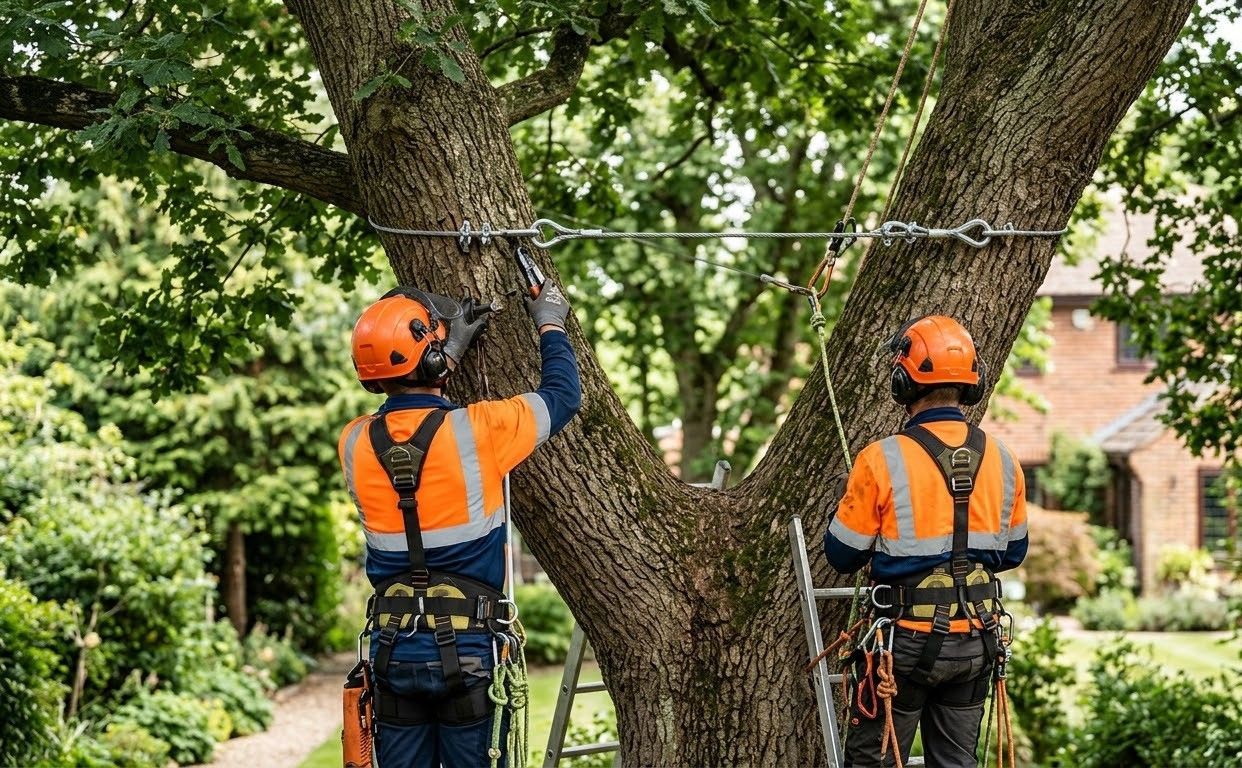
EARLY ACTION
Preventive Cabling
Trees showing early signs of a weak fork can be cabled before any crack forms. Acting early is simpler, and it gives the tree the best chance of growing into a sound, stable structure.
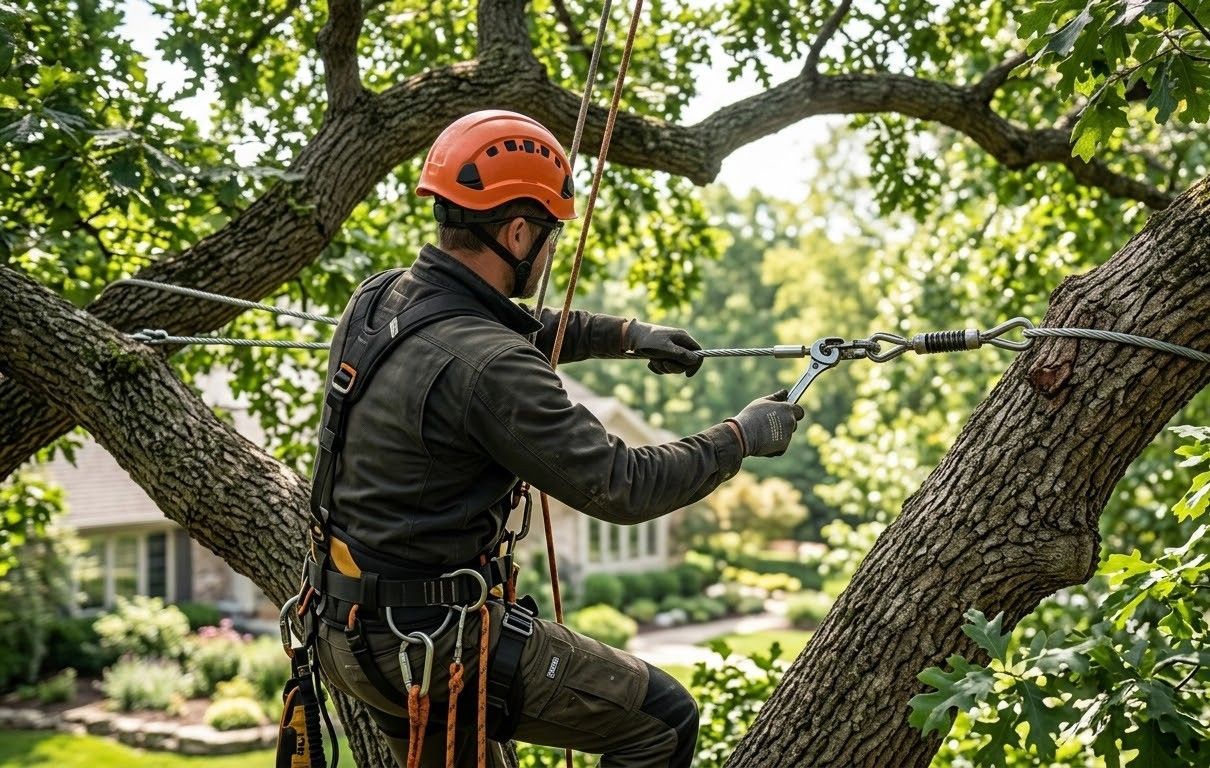
ONGOING CHECKS
Cable Inspection and Adjustment
Cables need periodic checks as the tree grows. We inspect the systems we install, checking hardware, cable tension, and how the tree is responding, then recommend adjustments or replacement when they are needed.
THE WORD ON OUR WORK
WHAT OUR CLIENTS SAY.
Cabling customers often tell us they expected to hear their tree had to come down and were relieved to learn otherwise. They appreciate the honest assessment, the clear explanation of how the system works, and the peace of mind of having a favorite tree supported before the next storm.
FAQ
FREQUENTLY ASKED QUESTIONS.
Tree cabling is less familiar than trimming or removal, so questions are natural. These answers explain what cabling does, when it helps, and what Spartanburg property owners should expect afterward.
What is tree cabling, and why is it needed?
Tree cabling is a preventive technique that uses high-strength cables to support weak or vulnerable branches and trunks. It helps guide healthier growth and steadily reduces the risk of splitting, cracking, or falling limbs as the tree matures over time.
How do I know if my tree needs cabling?
Common signs include visible cracks, heavy or uneven limb weight, storm damage, and trees with two or more trunks rising from one narrow fork. A professional inspection confirms whether cabling will genuinely help your specific tree and its situation.
Is tree cabling safe for the tree?
Yes, when trained technicians install it correctly. Proper cabling promotes longer life, improved stability, and healthier growth by reducing strain on weak areas, while poorly placed hardware can damage the wood and fail to correct anything at all.
Can I install tree cabling myself?
Cabling should always be handled by trained professionals. Improper installation can damage the tree, fail to correct the problem, or create new hazards, and the work itself requires skilled climbing and precise hardware placement high in the crown.
How long does tree cabling last?
Properly installed cables can last for many years, but they still should be inspected regularly to confirm they remain secure and effective. As the tree keeps growing, hardware may need adjustment, and aging cables eventually need full replacement.
Will cabling make my tree completely safe?
Cabling reduces risk but cannot eliminate it. It supports a weak area, yet it cannot restore decayed wood or stop extreme storms. A realistic assessment of the tree's overall health always comes first, before recommending any support system.
Can a tree that already split be cabled?
Sometimes. D & A Tree Surgeons LLC assesses split trees around Spartanburg, SC, and when enough sound wood remains, bracing and cabling may hold the union together. Severe splits combined with decay usually mean removal is the safer choice.
Why choose your team for tree cabling?
D & A Tree Surgeons LLC gives honest assessments, installs high-strength systems carefully, and inspects them regularly over time. Spartanburg, SC, property owners also get an owner-operated crew that would much rather save a good, healthy tree than remove it.
HOW WE WORK
FROM WEAK FORK TO SUPPORTED CROWN, HERE IS HOW.
STEP 01
WE INSPECT THE DEFECT
We examine the weak union, crack, or heavy limb up close, along with the tree's overall health, root condition, and decay. That tells us whether cabling will genuinely help or whether other options make more sense.
STEP 02
WE GIVE AN HONEST ANSWER
If cabling can extend the tree's life safely, we explain how the system will work and where it will go. If the tree is too far gone, we tell you that directly and discuss alternatives.
STEP 03
WE PLAN THE SYSTEM
Cable placement is planned high in the crown, roughly two-thirds of the way from the weak union toward the branch tips. We choose anchor points in sound wood so the system carries load effectively.
STEP 04
WE PREPARE THE CANOPY
Before installing anything, we may lighten heavy limbs or remove deadwood so the new cables are not asked to carry more than necessary. That reduces strain on both the hardware and the tree itself.
STEP 05
WE INSTALL THE SUPPORTS
High-strength cables, and bracing where needed, are installed with care to limit wounding the tree. The system is set to support the tree while still allowing the natural movement that helps wood grow stronger.
STEP 06
WE CHECK IT OVER TIME
Cables should be inspected regularly once installed. We recommend a sensible schedule for follow-up checks, looking at hardware, tension, and the tree's growth so the system keeps doing its job for years to come.